Materials
Reading materials and finishes on a listing
Solid wood, veneer, oiled, lacquered, powder-coated: the words on a furniture listing say a good deal about how a piece will age and how to look after it, once you know how to read them.
Solid wood, veneer and everything else
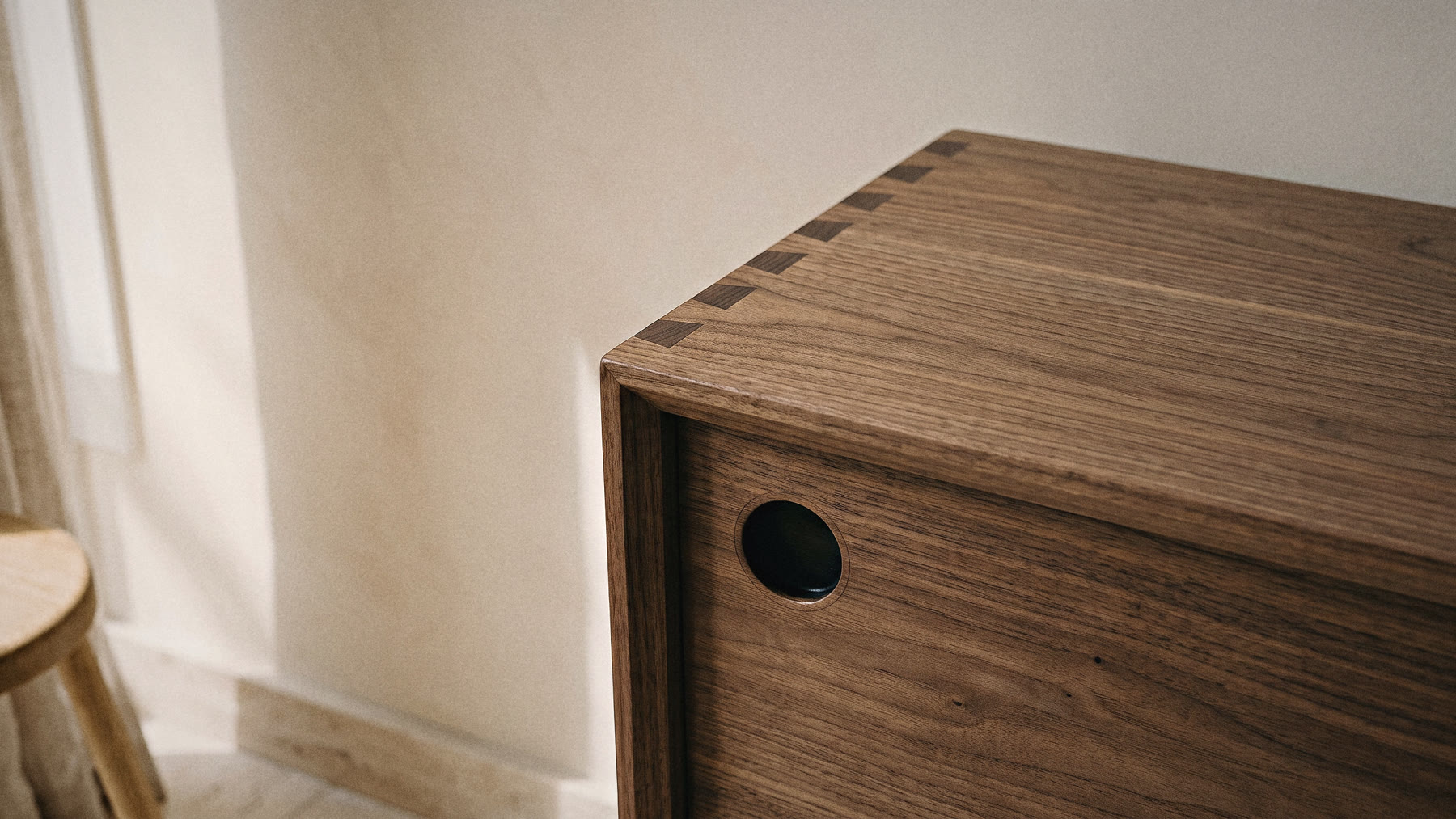
“Solid oak” on a listing should mean that the parts named are made of oak all the way through. Solid wood can be sanded and refinished many times over its life, and its edges show the grain running continuously round a corner.
“Oak veneer” means a thin sheet of oak, usually between half a millimetre and a few millimetres thick, glued to a core of plywood, MDF or particleboard. Veneer is not a lesser material in itself: it is stable, it allows large flat surfaces that would warp in solid timber, and much of the best twentieth-century furniture is veneered. It can be lightly sanded once or twice, not repeatedly.
“Oak finish”, “oak effect” or “oak look” usually means no oak at all, but a printed foil, paper or laminate made to resemble it. These are hard-wearing and cheap, and cannot be repaired by sanding. If a listing is vague, the maker’s specification sheet or the shop will say which it is.
Solid wood moves
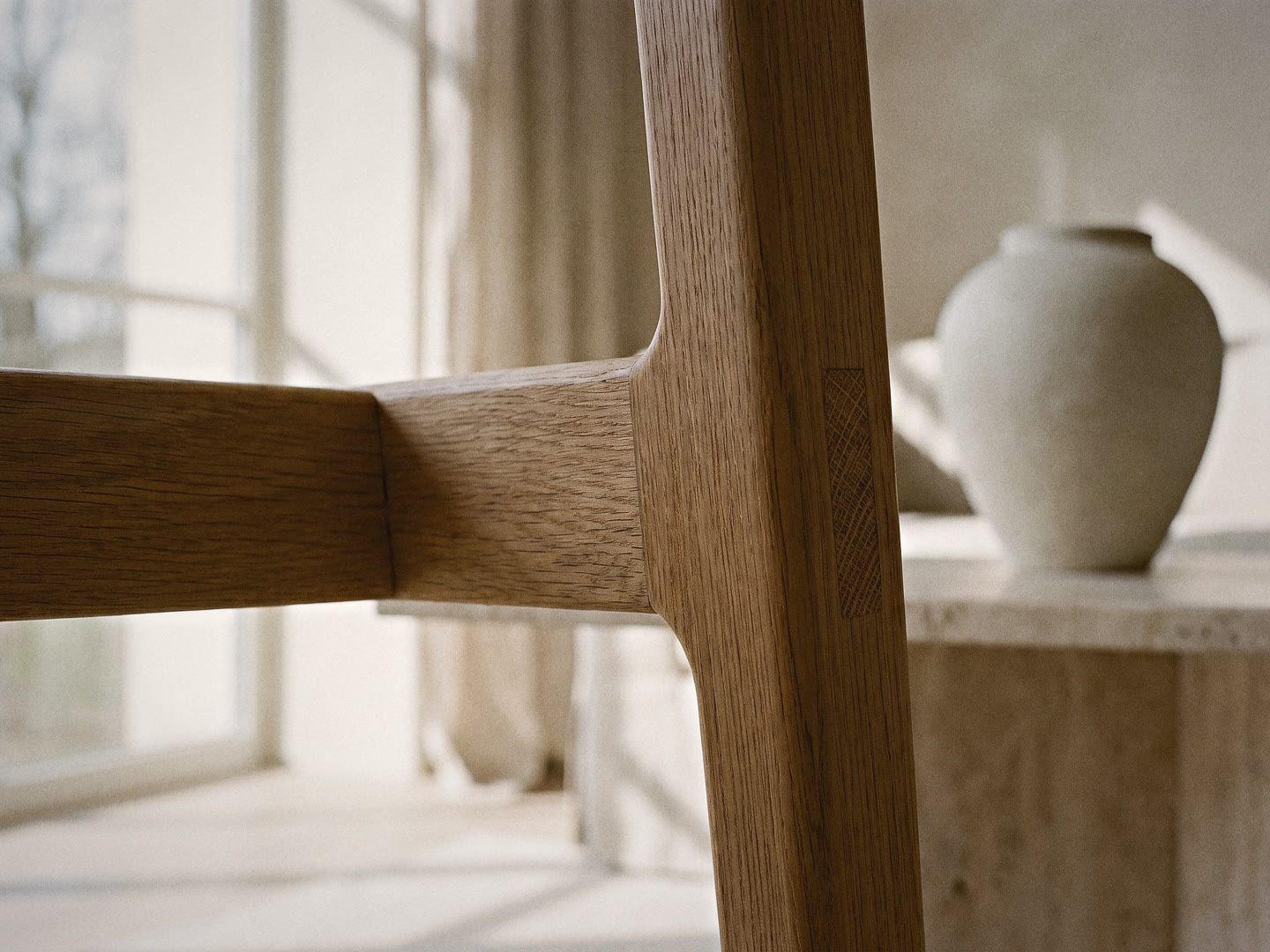
Wood takes up and gives off moisture with the air around it, and it swells and shrinks across the grain as it does. A solid tabletop of 90 cm can change in width by a few millimetres between a damp summer and a dry, heated winter. Good makers allow for this in how a top is fixed to its frame.
Indoor wood is happiest at a relative humidity of roughly 40 to 60 percent. Keep solid pieces away from radiators, underfloor-heating outlets and strong direct sun, which dry and fade one side faster than the other. Small seasonal cracks in solid wood are often normal, and the maker’s care notes say what to expect.
Expect wood to change colour, too. Oak and ash warm and yellow with light, walnut and cherry lighten or darken. A new piece next to an older one of the same timber will not match at first.
Oiled, lacquered, soaped and waxed
An oiled finish soaks into the surface and leaves it matte and natural to the touch. It marks more easily than lacquer, but a mark can usually be sanded lightly and re-oiled on the spot. Most makers suggest re-oiling a dining table once or twice a year, more if it is used hard.
A lacquered finish forms a sealed film on top of the wood. It resists water rings, wine and grease far better, and needs only a damp cloth. When it is damaged, though, the repair is harder: a deep scratch through the lacquer usually means refinishing the whole surface.
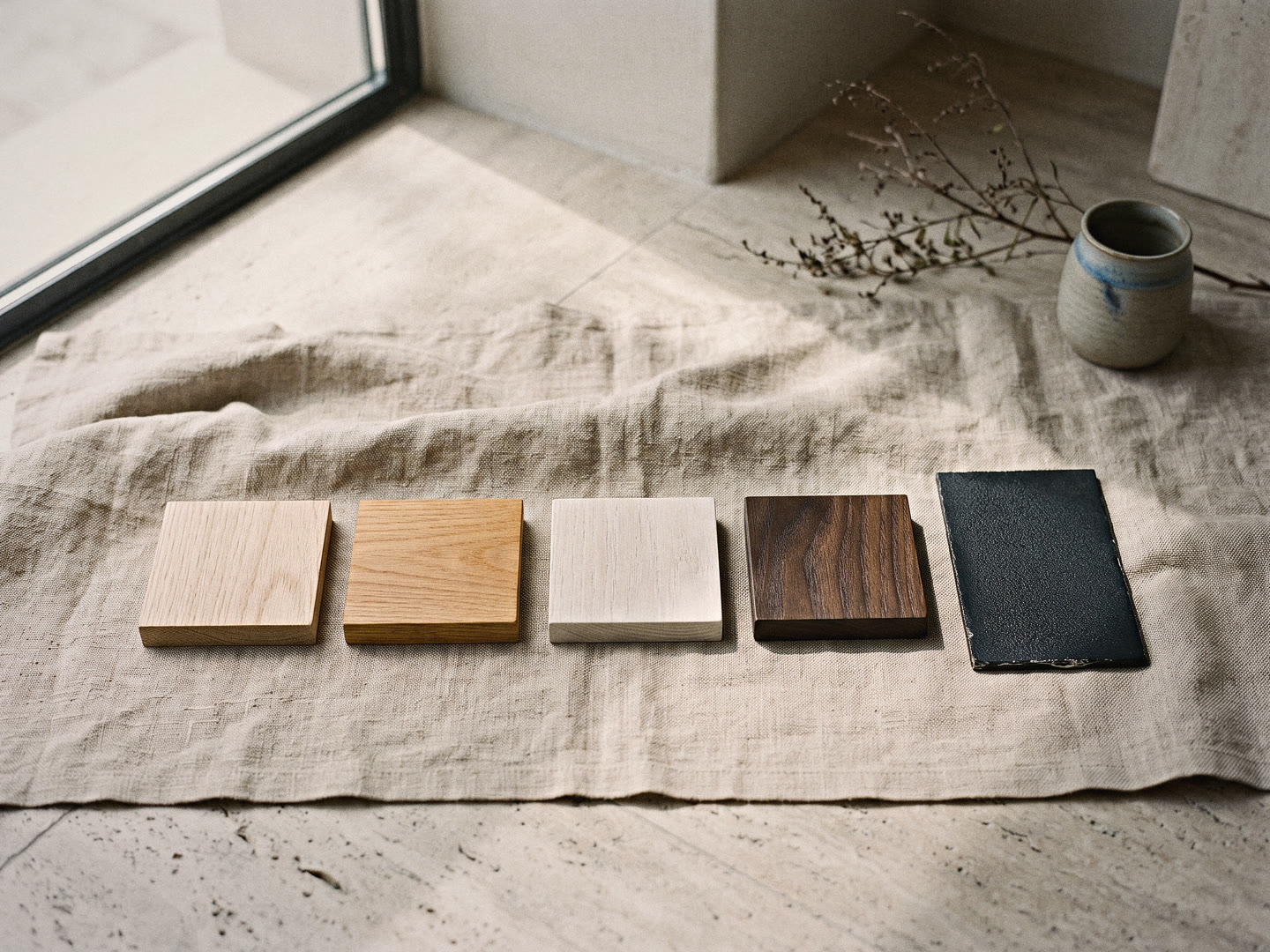
Soap finishes, a Scandinavian practice on pale woods, and wax finishes sit between the two: pleasant to touch, easy to refresh, less resistant to stains. Pigmented finishes, white or tinted oils and lacquers, change the colour and also wear differently from a clear finish.
Metal, stone and outdoor materials
Powder coating is a dry paint baked onto steel or aluminium. It is tougher than wet paint and comes in matte, satin and textured finishes. On steel outdoors, the coating is only as good as its weakest chip; aluminium, which does not rust, or galvanised steel under the coat, last longer in the weather.
Marble, travertine and other natural stones are porous and etch with acid: lemon juice and wine leave dull marks even on a sealed top. Many makers treat this as part of the material’s character; others offer stone with a harder protective treatment, and state it.
Teak and other dense hardwoods outdoors turn silver-grey within a season if left untreated. That is a surface change, not decay, and an oil restores the colour if wanted. Outdoor cushions differ widely in how they handle rain, and the maker states whether they can stay out.
Upholstery and certificates
For upholstery, the most useful number on a listing is the abrasion figure from the Martindale test, given in rubs. As a rough guide, about 15,000 to 25,000 rubs suits general domestic use, and 25,000 or more suits a family sofa used every day. Higher figures are usually aimed at offices and hotels.
Removable, washable covers, the fill of the cushions (foam, feather, fibre or a mix) and the frame material are also worth looking for. Feather cushions need plumping; foam keeps its shape; mixed fills are a compromise.
Certificates, such as FSC or PEFC for responsibly sourced timber, or a textile label, are the maker’s to state and to evidence. We list what makers and shops say, and have tested nothing ourselves.
In the shops
Tables, sideboards and shelving
Nothing in the shops matches today.